
Bocanariz - Santiago, Chile's Most Awarded Wine Bar
Published 10 October 2017
Santiago, Chile. It's exciting, textural and mysteriously sexy. Distinctly European, with heavy Northern American influence, it's one of those big cities that can be compacted into a CBD with a number of different and interesting 'barrios' or neighbourhoods.
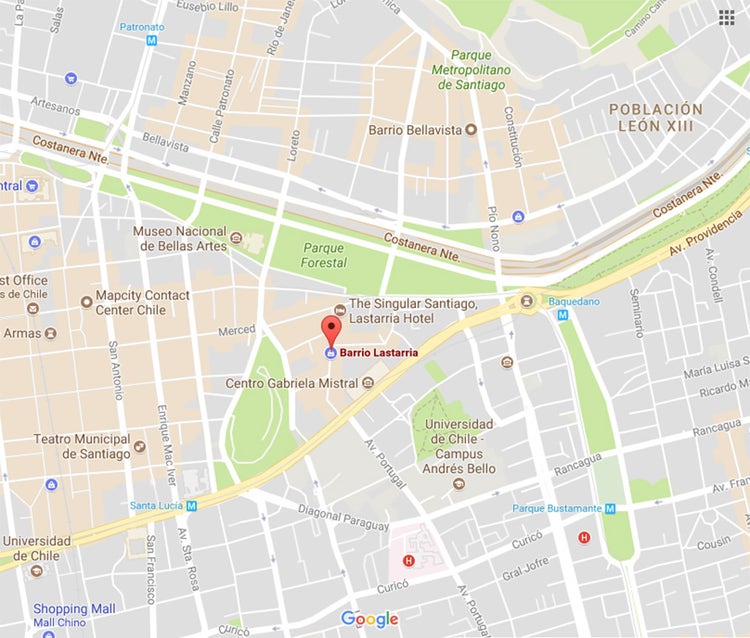
Barrio Italia spawns off 'Avenida Italia' (Italy Avenue), where one can find designer furniture shops, craft and garden stores and cheeky boutiques with architecture to match - for example. Around the corner from Santiago's ritzy 'The Singular' hotel and the Centre for Contemporary Art, you'll find artists and jewellers sporting their wares and a smattering of people looking for somewhere to satisfy their desires. Our destination was Bocanariz, Santiago's most awarded wine bar.
3 sparklings, 3 whites. A great way of comparing regions and winemaking techniques. First of all, the oysters were divine and the ceviche was the best we'd ever tasted. Flavours of lime, avocado, and fresh red onion with chunks of super fresh fish. The benefits of sampling various wines at this point was really clear. For example, comparing two Sauvignon Blancs from different wineries, valleys, different altitudes and different terroir. This set the trend for the rest of the meal. The tasting notes below are exactly what I wrote at the time. As we undertook our first course, a quick glance at the table and Andrea had delivered more of their house baked and toasted sourdough to mop up the remainder of the ceviche. A quick debrief and with the help of Andrea, we selected a second round of food. Warmed mozzarella, deer carpaccio and mushroom carpaccio. We tried to keep the food on the fresher side, having spent the last week in Peru avoiding anything that wasn't boiled, roasted or cooked in some way to avoid a South American slant on 'Bali-belly'.
Warmed mozzarella, Mushroom carpaccio and Deer carpaccio with matched reds and a sneaky Sauv. Blanc. As far as Chilean wines go, I was already excited about Chile's take on white wines (having a large coastal proximity), Cabernet, Shiraz but I was definitely less acquainted with Carmenere and Carignan, the latter having been confused as Chilean Merlot for a quite a while. Both of these varietals are intensely fruited, excitingly complex with generous tannins. However, our favourite red of the day was Tipaume, a blend of 60% Carménère, 30% Cabernet sauvignon, 4% Merlot, 3% Lacrima Cristi, 2% Viognier, 1% Malbec and heralds from Valle del Alto Cachapoal, 120km south of Santiago.
Categories
Choose Wine supports the responsible service of alcohol. It is against the law to sell or supply alcohol to, or to obtain alcohol on behalf of, a person under the age of 18 years. Liquor licence number 57702255.
Choose Wine acknowledge the Traditional Custodians of the lands and waters on which we work and live on across Australia. We pay our respects to Elders past, present and emerging.