
Saperavi: The Ancient Grape You Need to Know (And Drink)
Published 11 May 2026 by Katrina Kupke
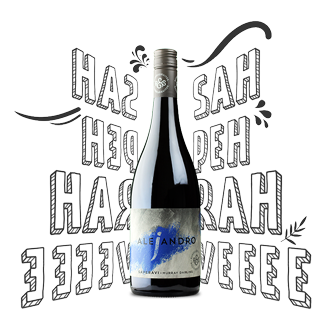
Bold, inky, and built for flavour - Saperavi is one of the wine world's best-kept secrets. Here's everything you need to know about this extraordinary Georgian red.
What Is Saperavi?
Saperavi is a red wine grape originating from Georgia - the country, not the state - nestled between Russia, Armenia, Turkey, Azerbaijan, and the Black Sea. It is widely considered one of the oldest cultivated grape varieties still in commercial production anywhere in the world. Think about that for a moment: people have been growing and drinking Saperavi for thousands of years, and it's only just starting to make waves on Australian wine lists.
The name Saperavi translates roughly to "dye" or "paint" in Georgian, which gives you a pretty good clue about what's in the glass. This is a deeply, almost dramatically coloured wine - inky, dark, and rich in a way that immediately signals you're dealing with something serious.
What Does Saperavi Taste Like?
Saperavi delivers bold dark berries, plum, and spice upfront, with a full-bodied structure that's all fine tannins and natural acidity. The finish is long and savoury, with that distinctive dark-chocolate tinge that makes it genuinely hard to put down. It's the kind of red that holds its own with a slow-cooked lamb shoulder or a proper charcuterie spread.
What sets Saperavi apart from better-known full-bodied reds like Shirazor Cabernet Sauvignonis its combination of depth and vibrancy. The natural acidity keeps it fresh despite the weight, and the tannin structure gives it serious cellaring potential. This is not a one-trick blockbuster - it's a wine with genuine complexity and longevity.
Flavour profile at a glance:
- Dark cherry, blackberry, and plum
- Black pepper and warming spice
- Dark chocolate and earthy, savoury notes
- Long finish with fine, grippy tannins
- Natural acidity that keeps everything lively
Georgia: The Cradle of Wine
To understand Saperavi, you need to understand Georgia - and Georgia's relationship with wine is unlike almost anywhere else on earth.
Georgia is widely regarded as the cradle of wine civilisation. Archaeological evidence suggests winemaking there dates back around 8,000 years, making it one of the earliest known wine-producing regions in the world. Georgia is home to over 500 indigenous grape varieties, and Saperavi is among the most celebrated of them all.
So what makes Georgian wine so exceptional compared with its neighbours? The answer is part geography, part culture, and part history.
Geography does a lot of the heavy lifting. The Caucasus Mountains shield Georgian vineyards from brutal northern weather systems, while the Black Sea moderates temperatures and contributes valuable humidity. The result is a climate that is generally kinder and more balanced than much of the surrounding region - allowing grapes like Saperavi to achieve exceptional ripeness while still retaining the freshness and structure that make the wines so compelling.
Culture plays an equally important role. Neighbouring Turkey and Azerbaijan both have significant Muslim populations, meaning wine was never as culturally central in those countries as it has always been in Georgia. Armenia has its own excellent indigenous varieties and ancient winemaking traditions, but historically operated on a much smaller scale without the sustained investment to build a major global presence.
Russia, meanwhile, traditionally favoured volume over quality. During the Soviet era, Georgia effectively served as one of the USSR's premium wine suppliers - producing enormous quantities for Russian consumption. It was a stable but limiting arrangement.
How Russia's Wine Ban Transformed Georgian Wine
Everything changed in 2006 when Russia abruptly banned Georgian wine imports. For an industry built on supplying a single, captive market, it was a genuine shock - but it turned out to be the catalyst Georgian wine desperately needed.
Rather than continuing to produce vast volumes for a Soviet-era market, Georgian producers were forced to pivot almost overnight. The focus shifted toward quality-driven wines aimed at Europe, Asia, the United States, and - increasingly - Australia. Producers leaned into what made Georgian wine genuinely unique: more than 500 indigenous varieties, thousands of years of winemaking knowledge, and exceptional raw ingredients.
The results have been remarkable. Georgian wine has undergone a quiet revolution over the past two decades, and Saperavi has emerged as its international calling card - powerful, distinctive, and unlike anything else in the glass.
Saperavi in Australia: The Alternative Varietal Movement
Saperavi isn't just a Georgian story anymore. A small but growing number of Australian producers are now working with this variety, and the results are genuinely exciting.
One standout example is the team behind some of our favourite bottles at winedirect.com.au - winemakers Alex Russell and Lara Suitor, who make a compelling Saperavi out of their property in the Riverland. What makes their approach particularly interesting is the contrast they work across: alongside warm-climate alternatives like Saperavi, Durif, Lagrein, Montepulciano, and Graciano, they also own a vineyard in Pipers River, Tasmania, producing exceptional cool-climate Pinot Noir, Chardonnay, Riesling, and Gewurztraminer.
That's a remarkable range - from the sun-drenched Riverland to the cool, windswept hills of northern Tasmania - and it reflects a genuine curiosity about what Australian terroir can do with varieties most producers wouldn't dare attempt. Their Saperavi is well worth seeking out. (And if you're after mate's rates, you know where to find us.)
Why You Should Be Drinking Saperavi
If you're the kind of wine drinker who gravitates toward Shiraz, Tempranillo, or Montepulciano, Saperavi is an easy next step - and a genuinely rewarding one. It offers that same full-bodied, dark-fruited richness, but with its own distinct personality: a little more savoury, a little more structured, and with that dark-chocolate finish that sets it apart.
It's also an excellent conversation piece. There's something genuinely compelling about pouring a variety that has been cultivated for 8,000 years - one that survived the Soviet era, a Russian trade ban, and centuries of geopolitical upheaval to land in your glass tonight.
Saperavi pairs beautifully with:
- Slow-cooked red meats (lamb, beef, duck)
- Hard and aged cheeses
- Rich, spiced dishes and braises
- Charcuterie and cured meats
- Dark chocolate-based desserts
Find Saperavi at winedirect.com.au
We love an underdog variety at winedirect.com.au, and Saperavi is one of our favourites. Whether you're an adventurous wine drinker looking to expand beyond the usual suspects, or you're chasing that deep, structured red that holds its own on a big occasion, Saperavi is worth every bit of your attention.
Browse our range of Saperavi and alternative varietal wines, or get in touch with the team - we're always happy to talk bottles.
Looking for more alternative varietals to explore? Ask us what's drinking well right now.
Categories
Choose Wine supports the responsible service of alcohol. It is against the law to sell or supply alcohol to, or to obtain alcohol on behalf of, a person under the age of 18 years. Liquor licence number 57702255.
Choose Wine acknowledge the Traditional Custodians of the lands and waters on which we work and live on across Australia. We pay our respects to Elders past, present and emerging.